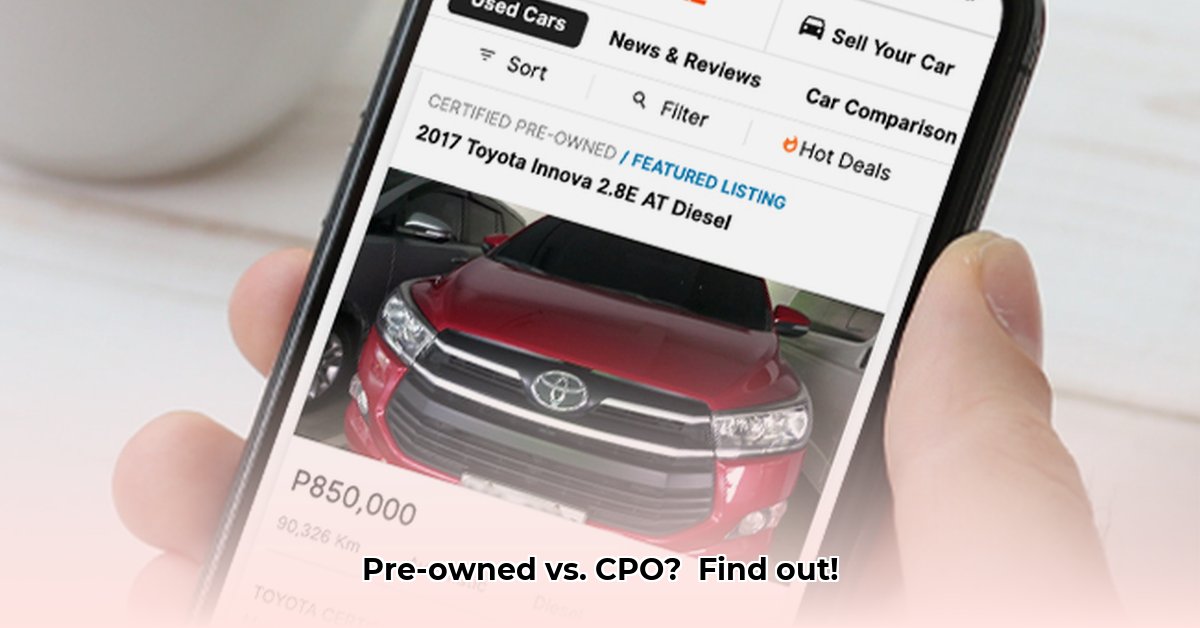
Shopping for a used car can be daunting. The term "pre-owned" often accompanies "certified pre-owned" (CPO) vehicles, leaving many buyers confused. This guide clarifies the meaning of "pre-owned" and provides a structured approach to buying a CPO vehicle. We'll cover inspections, warranties, cost considerations, and potential risks, empowering you to make an informed decision.
Understanding Certified Pre-Owned (CPO) Vehicles
What does "pre-owned" mean in the automotive world? Simply put, it refers to a used car. However, "certified pre-owned" signifies a used vehicle that's undergone a rigorous inspection and typically includes an extended warranty. This offers a level of assurance not found in standard used car purchases. Think of it as a used car with an added layer of quality and protection.
What to Look For in a Certified Pre-Owned Program
Manufacturer-backed CPO programs generally offer the most comprehensive coverage and peace of mind. Dealer-certified programs exist but may have less consistent inspection standards and warranty terms. Key features to consider include:
- Multi-Point Inspection: A thorough examination encompassing numerous vehicle components, exceeding the typical used car inspection. This ensures that major mechanical aspects are addressed.
- Extended Warranty: This crucial element extends the manufacturer's original warranty, mitigating the risk of costly repairs. It's a strong indicator of reliability.
- Roadside Assistance: This valuable service provides aid in emergencies, such as flat tires or jump starts, offering convenience and peace of mind. Expect this to be an included service.
- Clean Vehicle History Report: A spotless Carfax or AutoCheck report is essential. This document reveals any accidents, repairs, or other issues in the vehicle's history, ensuring transparency.
How to Evaluate a CPO Vehicle: A Step-by-Step Process
Buying a CPO vehicle requires careful evaluation. Follow these steps:
Research Reliability Ratings: Before searching for specific vehicles, consult resources such as Consumer Reports or J.D. Power to assess the reliability of different makes and models. This pre-selection strategy can save you time and potential headaches.
Compare CPO Programs: Manufacturers offer varying CPO programs with differing warranty lengths, covered repairs and additional services. Directly compare terms and conditions to maximize value. This comparison is key to finding the best deal.
Meticulously Examine the Vehicle History Report: Don't merely check for accidents; review maintenance records. Diligent maintenance signals conscientious previous ownership. Take note of any major repairs needed.
Obtain an Independent Inspection: Before purchasing, have a trusted mechanic conduct a pre-purchase inspection. This valuable safeguard detects any hidden problems and protects your investment. It's a recommended practice.
Understanding the Extended Warranty: Knowing the Fine Print
The extended warranty is central to a CPO program. However, carefully review its terms and conditions. Note the duration (in years and miles), deductibles, limitations, and exclusions to accurately understand its value. Also, confirm whether the warranty is transferable to future owners. Don't assume transferability.
Cost Considerations: A Balancing Act
While CPO vehicles have a higher initial cost, potential long-term savings on repairs might offset this. However, factor in the purchase price, any additional fees, taxes, potential repairs (even under warranty), and the vehicle's overall reliability. Don't solely focus on the upfront cost.
Potential Risks and Mitigation Strategies
Even with CPO vehicles, unforeseen issues can occur. Here's how to mitigate risks:
- Always Get a Pre-Purchase Inspection: An independent mechanic's assessment remains essential.
- Thorough Research is Paramount: Conduct comprehensive research into the vehicle's reliability and history.
- Read All Documents Carefully: Scrutinize warranty documents to grasp the coverage and exclusions.
Conclusion: Making an Informed Decision
Choosing a CPO vehicle depends on your budget and priorities. While they offer peace of mind and potentially lower long-term costs, their higher initial price requires careful consideration. Weigh the pros and cons, conduct thorough research, and don't hesitate to seek expert advice. Remember, a CPO vehicle represents a balance between cost and reduced risk in your used car purchase.
⭐⭐⭐⭐☆ (4.8)
Download via Link 1
Download via Link 2
Last updated: Thursday, May 01, 2025